











Blog Post

Leading scientists gather before the UN Climate Summit to highlight the sense of urgency in the Amazon

  • By Rhea Madraymootoo
  • 22 Sep, 2019
NEW YORK -- September 21, 2019 -- More than 30 scientists and researchers gathered at the eve of the UN Climate Action Summit at the UN’s headquarters to call on the scientific community at large to save the Amazon.

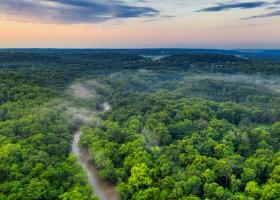
For context, the Amazon boasts the title of the largest rainforest in the world and a place of immense natural and cultural wealth and diversity. It harbors more than a fifth of the species on Earth, including over 2,300 species of fish which are found across the basin, more than in the entire Atlantic Ocean. The Amazon also plays a critical role in global water cycles. Its rivers hold one fifth of all the fresh water of the planet, and the Amazon River is the largest tributary to the world’s oceans.

The Amazon is also a source of enormous cultural diversity with more than 35 million people living in this magnificent ecosystem. This includes nearly one million indigenous peoples from around 400 indigenous groups each with their own cultural identities and territorial management practices, and speaking 300 different languages. This cultural richness is complemented by communities of quilombolas, descendants of African slaves, and a diverse range of traditional peoples utilizing forest and river resources.
The Amazon is a critical buffer against climate change. It absorbs about 20% to 25% of the 2.4 billion metric tons of carbon that forests remove from the atmosphere every year. The entire Amazon stores nearly 100 billion metric tons of carbon—about a decade’s worth of global emissions. 

The Amazon rainforest is at grave risk of destruction, as made apparent by the widely covered forest fires. In response, the SDSN convened an Amazon Scientists meeting with the goal of establishing an ongoing scientific process to inform decision-making on the survival and sustainable development of the Amazon and the establishment of a Scientific Panel for Amazon Survival (SPAS). 
The meeting was Chaired by Dr. Carlos Nobre, Scientific Director of the National Institute for Climate Change Research, who noted the “disruptive change in the past 40 years” to the Amazon and the need to “act urgently” in order to solve the climate crisis. He highlighted that this meeting was a historic moment as we mobilize scientists of the region to save the Amazon and to contribute with scientific evidence to decision-making.
Prof. Jeffrey Sachs, director of the SDSN stressed the need for monitoring the state of the Amazon and the ability to say no, indicating that some issues could not be compromised upon while emphasizing the need for science, technology and knowledge for the survival and sustainable management of the Amazon

Discussions included our responsibilities to the Amazon and the declaration by Former UN General Assembly President, María Fernanda Espinosa Garcés, concerning the importance of placing the Amazon “back on the international agenda” and our responsibility to save “its internal diversity and richness.”


Other discussions included:
  • The urgency of having ecological forecast systems in place.
  • The need for trans-disciplinary research and understanding of the economic implications of devastation in the Amazon.
The committee will hold a two-day meeting during the UN’s 25th climate change conference (COP25) in Chile the week of December 8 with the goal of publishing its first report on the State of the Amazon by June 2020.
By SDSN Secretariat 03 Aug, 2021
This month, SDSN celebrated its growing network, talked about the incredible amount of media coverage on the 2021 SDR, and reflected on this year's High Level Political Forum
By Fiona Laird 02 Aug, 2021
World Resources Institute recently released Unlocking a Renewable Energy Future: How Government Action Can Drive Private Investment, a report outlining key challenges to increasing clean energy investment and deployment. This report digs into the financial and regulatory mechanisms available to support policy frameworks like that outlined in SDSN USA’s Zero Carbon Action Plan (ZCAP), released in October 2020.
By Sam Van Hoof 30 Jul, 2021
The ‘Fit for 55' package includes a ban on combustion engines from 2035, a Carbon Border Adjustment Mechanism, and a Social Climate Fund among other provisions.
By Giovanni Bruna 29 Jul, 2021

SDSN Canada reconvened the network membership on June 16th, 2021 for the annual Members Meeting.

This year's meeting featured conversations on the current state of the SDGs in Canada, emerging opportunities for post-secondary institutions, networking breakout sessions, and a featured joint presentation by the Brookings Institution and Rockefeller Foundation on mobilizing campuses and communities for the SDGs using the 17 Rooms initiative. A lightning round of member initiatives was also included to highlight a portion of the SDG work happening across the network.

Recap the discussion by reading the meeting notes   or listening to the audio recordings for each session.

Meeting Highlights:

  • The SDSN Global annual Sustainable Development Report 2021  was released June 2021, tracking progress on the SDGs by country (Canada ranked 21st in the world). The report outlines the short-term impacts of COVID-19 on the SDGs and describes how the SDGs can frame the recovery.
  • The Government of Canada has released Canada’s National Strategy for the SDGs, Moving Forward Together. The strategy outlines a set of 30 actions towards the SDGs, including localizing the SDGs, supporting partnerships with Indigenous initiatives, and advancing research into the gaps in Canada's efforts to achieve the 2030 Agenda.
  • The 17 Rooms initiative  is a tool for advancing SDG collaboration, community-centric conversations, and bottom-up action. There are three key principles of consideration:
    • Every SDG gets a seat at the table (a dedicated room).
    • Identify what the next step is, and not the perfect step. What are things you can do together over the next 12 to 18 months that you can implement action on the SDGs?
    • It is about conversations, not presentations. The goal is to learn from each other and create a community of practice.
    • Join the 17 Rooms-X Community of Practice to access the beta toolkit.
  • A ‘lightning round’ of presentations by members spotlighting SDG work from Colleges and Institutes Canada, the Interdisciplinary Research Center in the Operationalization of Sustainable Development (CIRODD), Vancouver Island University, the University of Saskatchewan, and the University of Waterloo.

The meeting was also a chance to invite the membership into initiatives designed to be more intentional about the network’s collective presence and impact. In this vein, the network thinks that the 17 Rooms process can be a critical resource for campus conversations on the SDGs. It also relaunched the Member Challenge , is starting the ‘SDG Teaching Community’ for faculty across the network, and is convening a small working group of interested members to talk about an enhanced governance structure for the network.

By Lauren Barredo 29 Jul, 2021
We encourage stakeholders to provide meaningful input to aid the development of a better and more complete report. We invite feedback from individuals and organizations, from all sectors.
By FABLE 28 Jul, 2021
The FABLE Consortium is releasing two policy briefs over the coming months intended to advise national governments on sustainable land-use and diets. The first brief, entitled “Environmental and agricultural impacts of dietary shifts at global and national scales'' is now available.
By SDG Index 23 Jul, 2021
The Sustainable Development Report 2021 has been covered by the BBC, the Guardian, Washington Post, and more than 100 other media outlets.
By Isabella Massa 21 Jul, 2021
SDSN together with the United Nations Resident Coordinators in SIDS and the Permanent Mission of Antigua and Barbuda hosted on 12 July 2021 a High-Level Political Forum (HLPF) side event to discuss the issue of measuring multidimensional vulnerability, and its relevance for international financing mechanisms.
By SDGs Today 20 Jul, 2021
SDGs Today recently launched their My School Today! call to action, meant to support students and local communities to geo-reference their schools and education facilities as part of an effort to promote timely information on school locations in Africa
By SDSN Secretariat 20 Jul, 2021
SDSN and our networks are hosting a number of events alongside the UN's High-Level Political Forum on Sustainable Development (HLPF). We are thrilled to invite you to join us at the following events, which SDSN is hosting or are organized by our partners.
Show More
Share by: