










Amazon Scientists Meeting
| Saturday, 21 September
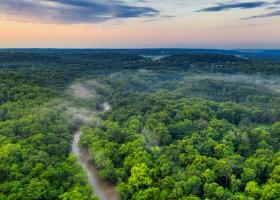
More than 30 scientists and researchers gathered at the eve of the UN Climate Action Summit at the UN’s headquarters to call on the scientific community at large to save the Amazon. The Amazon is also a critical buffer against climate change. It absorbs about 20% to 25% of the 2.4 billion metric tons of carbon that forests remove from the atmosphere every year. The entire Amazon stores nearly 100 billion metric tons of carbon—about a decade’s worth of global emissions. But, the Amazon rainforest is at grave risk of destruction, and with it the wellbeing of our generation and the generations to come.
In response, the SDSN convened an Amazon Scientists meeting with the goal of establishing an ongoing scientific process to inform decision-making on the survival and sustainable development of the Amazon and the establishment of a Scientific Panel for the Amazon. Discussions included our responsibilities to the Amazon and the declaration by Former UN General Assembly President, María Fernanda Espinosa Garcés, concerning the importance of placing the Amazon “back on the international agenda” and our responsibility to save “its internal diversity and richness.” The committee will hold a two-day meeting during the UN’s 25th climate change conference (COP25) in Chile the week of December 8 with the goal of publishing its first report on the State of the Amazon by June 2020.
Read the full event summary here.
Securing Our Future: People, Food and Nature Solving the Planetary Emergency
| Sunday, 22 September
The biggest event to focus on nature-based climate solutions outside of the UN was held on Sunday, 22 September, on the eve of the official Climate Summit. More than 500 people attended including heads of state, indigenous community leaders, renowned activists and representatives from leading environmental organizations, to join forces to better harness the power of nature to solve the climate emergency. Nature-based solutions, such as protecting forests and farming which increases tree cover, stand to offer a third of the emissions reductions needed by 2030 to keep global warming below 1.5 degrees.
Participants at the event aim to catalyze a multi-stakeholder movement that will carry into to 2020, when a number of landmark events will focus the world's attention on nature and climate. Essential among them, the UN will host its first ever UN Nature Summit in September, and signatories to the UN Convention on Biological Diversity will adopt a new global biodiversity policy at the 15th Conference of the Parties in October in Kunming, China, to pave the way for transformative pathways to achieve the 2050 Vision of the Convention to live in Harmony with Nature.
Read the full event summary here.
A
360 Look Towards 2030: Taking Stock of the SDGs
| Monday, 23 September
The event featured interventions by Jeffrey D. Sachs (SDSN), Aart De Geus (Bertelsmann Stiftung), Annick Girardin (Minister, Overseas Territories, France) and senior officials from the World Bank and the Government of Finland. All the interventions underlined the need for more and better data to track the SDGs. In particular, speakers underlined the need for more real-time estimates in order to inform policy reforms and investment decisions. Speakers highlighted SDG policy interventions taking place in their respective countries and underlined the importance of effective accountability and monitoring mechanisms for implementing long term transformations. In this regard, key metrics are needed to track not only domestic implementation of the goals but also how international supply chains and unsustainable consumption and production may have negative impacts on other countries including small islands. SDSN, in collaboration with the Bertelsmann Stiftung, remains strongly committed to monitoring countries' performance on the SDGs internationally and seeks to integrate new knowledge and data as they become available in the flagship series SDG Index and Dashboards.
Transformations to Achieve the Sustainable Development Goals
| Monday, 23 September
The event was organized by SDSN, the World Benchmarking Alliance (WBA), and the World Business Council on Sustainable Development (WBCSD) in order to each present and align their approaches to transformations for sustainable development. It was discussed that the key to delivering the SDGs is a profound transformation of societies’ systems of consumption and production, as well as the way our economies value the natural and social systems on which they are built. The key challenge is therefore to set a clear path to bringing about transformation at the rate or scale required to deliver on the vision laid out by the SDGs, backed by a collective and comprehensive understanding of the necessary and urgent transformations the world needs.
Some key outcomes and next steps include engaging companies of all sizes and industries, clearly defining ways in which policy can make a difference, collaborating in a faster and improved way, greater public and private investment, and aligning different approaches to systems transformation.
International Conference on Sustainable Development (ICSD)
| Tuesday - Wednesday, 24-25 September
The seventh edition of the annual
ICSD
brought together around 1,000 participants to talk about Models, Partnerships, & Capacity Building for the SDGs. This two-day event was a forum for scientists and policy makers to come together to share practical research and solutions. The first day featured around 350 presentations across 30 parallel sessions and a poster exhibition. Researchers and students shared their work on climate change, energy, agriculture, demography, and other SDG-related topics.
On the second day, high-level participants from the private sector and government shared their challenges and how researchers can help address them. Her Majesty the Queen of the Belgians opened this event. Her speech emphasized the need to implement the SDGs in an integrated manner, for example looking at agriculture and health collectively rather than individually. She asked the students and faculty in the room to think about how they can be communicators to help citizens understand and act on complex issues such as climate change.
A keynote address from SDG Advocate Edward Ndopu focused on the challenge of ensuring no one is left behind in the SDG Agenda. In a conversation with Professor Jeffrey Sachs, Ndopu highlighted his activism to ensure equal access to education for persons with disabilities, particularly young people, noting that worldwide 32 million children with disabilities have no access to education. He also elaborated the way different people, including his mother and his teachers, help him realize his dreams, but also the many ways he found to raise his own voice and advocate for both himself and the community of persons with disabilities.
Two discussions on the role of the private sector shared the common theme about the need for innovation to drive the transition to sustainability. Pat Brown, CEO of Impossible Foods, highlighted the need to transform our agriculture and food system, and the way scientists at impossible foods were able to develop a meatless burger patty offering all the taste of beef without the environmental footprint. Gayle Schueller, Vice President for Sustainability and Product Stewardship and Chief Sustainability Officer of 3M, presented a history of the company and how innovation has been fundamental to their business since their founding over 100 years ago. Schueller shared 3M’s recent breakthroughs in green chemistry, and a commitment that every new product will have a sustainability value commitment.
The afternoon featured a speech by the Coordinating Minister for Maritime Affairs of Indonesia Luhut Binsar Pandjaitan, who shared Indonesia’s commitment to sustainable tourism and SDG implementation. It was followed by a broad conversation between David Lipton, Acting Managing Director of the IMF, and Professor Jeffrey Sachs, which touched upon how we fiancé the SDGs and Paris Agreement, what we have learned from past financial crises, and the need for greater multilateralism.
For more information on ICSD, please visit
www.ic-sd.org. You can watch the full plenary (Wednesday)
here.
The
Columbia Center for Sustainable Development
hosted several side events alongside the ICSD this year.
Read the full summary of these events here.
Fixing the Business of Food: Sustainable Practices in the Food Sector
| Tuesday, 24 September
The Barilla Center for Food & Nutrition (BCFN Foundation), in partnership with the Sustainable Development Solutions Network (SDSN), The Columbia Center on Sustainable Investment (CCSI) and the Santa Chiara Lab—University of Siena (SCL), joined forces to help the agro-food sector accelerate progress towards the 2030 Sustainable Development Goals (SDGs). Angelo Riccaboni from the Santa Chiara Lab and Chair of Prima Foundation explained the report being presented which highlights the need for improved systemic practices in the food industry. The recommendations provided for corporate practices in the food sector go through four overarching topics:
- The development of products that contribute to healthy and sustainable dietary patterns;
- The identification of sustainable ways to produce food;
- Innovation of sustainable global supply chains;
- Good corporate citizenship.
The food industry by itself cannot address the challenges alone. Partnerships are needed with governments, academia and consumers. Sustainability reporting mechanisms are too heterogeneous today to make any comparison possible. Companies pick and choose their focus to highlight their strengths, which is why this working group recommends that companies and reporting frameworks align to answer the above four overarching dimensions.
“Businesses are co-responsible for the environmental and social aspects of their global supply chain,” even though it is hard to implement in practice - said Guido Barilla, chairman of BCFN during his opening speech. Hence, the food industry must transform in order to reach the SDGs.
Jeffrey Sachs explained the challenge of feeding 7.7 billion people and the shocking epidemic of metabolic diseases and obesity. Legal accountability and traceability of where food comes from is practically non-existent, even though agriculture is the most important driver of anthropogenic change. New metrics and new politics are needed to be far sighted, understand implications, monitor them and change course.
Scarlett Benson of Systemiq presented the latest FOLU (Food and Land Use Coalition) report called “Growing Better: 10 critical transitions for transforming food and land use.” The basic conclusion is that there is no trade-off between social, health and environmental benefits of food and land use. Among the critical transitions, she mentioned nutritious food, nature-based solutions and wider choice, supply and opportunity for all.
Emanuela del Re , Vice Minister of Foreign Affairs and International Cooperation of Italy, talked about the case of Italy. The country built its reputation with decades of multi-actors and multi-stakeholders’ effort to create a system that puts farmers at the center of the process. This is an example of a success story that can be an inspiration for many. Finally, Qu Dongyu, Director General of FAO described food systems and stressed on the importance of the environment, production, supply chain and value chain including culture and nutrition.
Read the full event summary here.
The Cost of Success: Identifying SDG Financing Needs and Pathways for Low-Income Countries
| Tuesday, 24 September
SDSN's SDG Costing Working group hosted an event, "The Cost of Success: Identifying SDG Financing Needs and Pathways for Low-Income Countries" on the 24th of September at the Permanent Mission of Denmark to the United Nations. This event launched and presented the findings of SDSN's new SDG needs assessment paper titled “
SDG Costing & Financing for Low-Income Developing Countries”. This paper draws on existing studies and data contributions from members of the SDG Costing Working Group (co-chaired by SDSN’s SDG Financing Initiative with leaders from the IMF, World Bank and OECD) to present an initial estimate for SDG financing needs and the financing gap for low-income developing countries (LIDCs).
It also facilitated a high-level conversation that highlighted core topics for discussion at the 26 September
High-level Dialogue on Financing for Development about policy opportunities for donor countries to mobilize and unlock additional public and private funds to fill the SDG financing gap and focus attention on prospects for collective actions at the UN.
Read the full event summary here.
Linking evidence with policy to achieve the SDGs: The Social Systems Evidence Platform
| Tuesday, 24 September
On the margins of the
International Conference on Sustainable Development (ICSD)
the
SDSN AusNZPac
and
SDSN Canada
co-hosted a workshop to discuss a new initiative that aims to bring the best available research evidence on what works to address the SDGs to policy and decision makers.
Social Systems Evidence (SSE)
aims to be the largest centralized database of research reviews, economic evaluations, and policy briefs pertaining to the SDGs. It is an initiative of SDSN members, the Monash Sustainable Development Institute (MSDI) in Australia, and the McMaster Health Forum in Canada. The workshop brought together knowledge creators and users from SDSN, the policymaking space, and other stakeholder groups to discuss how to best harness SSE to achieve the SDGs.
The workshop was opened by Professor Jean Andrey, Chair of SDSN Canada, and Professor John Thwaites, Chair of SDSN Australia, New Zealand & Pacific. The Chairs provided context for the workshop by explaining the relevance of Social Systems Evidence to the SDSN, as a network of knowledge creators that works closely with the policy community.
Introducing the Social Systems Evidence platform, Professor John Lavis, the Director of the McMaster Health Forum, explained its aims and functionality, its origins from the highly successful Health Systems Evidence platform, and how it is already being used to support policy processes in a range of countries.
Following this, Professor Lavis and Associate Professor Peter Bragge, Lead of the Monash-McMaster Social Systems Evidence Collaboration at the Monash Sustainable Development Institute, facilitated an interactive discussion with the participants on the opportunities for using the platform to both fill gaps in research and to support policy makers.
The Social Systems Evidence team recorded the many useful suggestions made by the participants, and looks forward to connecting with them on next steps.
Global Solutions Forum
| Wednesday, 25 September
The inaugural Global Solutions Forum, held in New York on Sept. 25, 2019, presented a variety of locally sourced solutions from ten of SDSN's 33 National and Regional Networks. The speakers from the Amazon, Caribbean, France, Italy, Malaysia, Nigeria, Northern Europe, Sahel, Spain, and Switzerland, all experts in science, tech, or public policy, highlighted concrete efforts to achieve sustainable development with 7-minute rapid-fire expositions. More like TED talks than doctoral dissertations, each presentation packed challenges and discoveries into 420 seconds of stories, images, and insights.
Learn more about the event, the speakers, and the solutions presented at globalsolutionsforum.org. SDSN produced a synthesis booklet with all solutions that can be found
here.
In addition to this, if you want to re-watch the event, you can find the full recording here.
Data for Now: Accelerating SDG progress through timely data
| Wednesday, 25 September
On Wednesday 25 September 2019, SDSN TReNDS, the Global Partnership for Sustainable Development Data (GPSDD), the World Bank and UN Statistics Division launch their new initiative,
Data for Now, on the margins of the UN General Assembly. The initiative aims to increase the frequency and timeliness of key sustainable development measures to enable governments to make evidence-based decision and drive progress on the world's biggest challenges.
SDSN TReNDS was represented at the launch event by TReNDS co-chair, Shaida Badiee, who emphasized the important role of universities and non-government organizations to help engage non-government partners in these national efforts, to broker consultations (acting as a neutral arbiter), to flag challenging issues governments may not raise themselves such the need for new governance arrangements, open data policies and, finally, bringing in their expertise in new methods and approaches to data collection.
Read the full event summary here.
The Importance of the Principles of Environmental Law to Provide Legal Effectiveness to the Sustainable Development Goals
| Wednesday, 25 September
On the 25th of September, at the Interchurch Center, a group of environmental law experts gathered to discuss the importance of the principles of environmental law to push the 2030 Agenda forward. The Carlos III de Madrid University, the Pascual Madoz Institute, the International Council of Environmental Law, and SDSN co-sponsored this event in which the book "Principios de Derecho Ambiental y Agenda 2030", published by Tirant Lo Blanch, was presented for Spanish and Portuguese speaking audiences. The book delves into the main principles of environmental law that are also contained in the draft of the Global Pact for the Environment that is currently being discussed at the United Nations and that intends to be the third Covenant of rights (including the environmental rights) that will complete the International Bill of Human Rights.
SDSN USA Pathways Meeting
| Saturday, 28 September
On September 28th, Caroline Fox, Elena Crete and Jeffrey Sachs from SDSN USA hosted the Pathways Project Open Meeting as an event alongside the UNGA. Around 35 people from academia, private industry, and government agencies participated in the four hour long meeting. The meeting objective was to provide a forum for network members to share ongoing climate and energy projects within the US and to discuss opportunities to collaborate on drafting a nationwide decarbonization policy framework with local, state, regional, and national dimensions.
The meeting showed that legal tools are available to decarbonize the US, however the network sees the necessity to further discuss innovative financial solutions and business models, such as green bonds, green bank, etc. and to evaluate what the optimum balance between market mechanisms, regulation, and laws should be in decarbonizing the US. Ideally, both political parties would see the economical, societal and environmental benefits to action and join forces to transform to a clean energy system.
Moving forward, the network is considering organizing into working groups to establish a political framework for the decarbonization of the US energy system. The framework would cover legal, technological, financial, as well as behavioral and aspects of a just transition.
Read the full summary here.