










Blog Post

Understanding Climate Action Urgency in 2020

  • By Sarah Sharif & Mayra Bravo
  • 03 Jun, 2020

One Way To Start Making an Impact

Urgency is defined by the Oxford Dictionary as: (of a state or situation) requiring immediate action or attention. The Intergovernmental Panel on Climate Change (IPCC) states global emissions must be halved by 2030 and reach net zero by 2050 to avoid climate catastrophe. How do we act towards these goals & timelines?

First, we act as a unified front on climate activism through the Sustainable Development Goals.

The Sustainable Development Goals are the blueprint to achieve a better and more sustainable future for all. They address the global challenges we face, including those related to poverty, inequality, climate change, environmental degradation, peace and justice. The 17 Goals are all interconnected, and in order to leave no one behind, it is important that we achieve them all by 2030. Learn more about the Sustainable Development Goals here.

“To achieve the SDGs, we need innovative technologies and programs targeted at key priorities, including health, education, power, connectivity, agriculture and environmental protection.” - Jeffrey Sachs

Second, we listen & educate ourselves on how world events are tied into climate change work.

We would be doing ourselves a major disservice if we did not talk about how COVID-19 and the global pandemic has impacted our efforts towards solving this crisis.

"At the backdrop of the climate crisis is a humanity crisis because it literally impacts everything and everyone. The deadline is intimidating but it represents the necessary urgency for action and mass behavioral change." - Peter Salib

The Harvard T.H. Chan School of Public Health (Harvard Chan C-CHANGE) has 5 excellent tips on how we can confront this work:

  1. We can make many smart investments to avert another outbreak. Federal, state, and local agencies can support public health leadership and science, we can provide more funding for needed research, early response to outbreaks, and supplies for testing. And we can do much more to control the illegal wildlife trade.
  2. We also need to take climate action to prevent the next pandemic. For example, preventing deforestation—a root cause of climate change—can help stem biodiversity loss as well as slow animal migrations that can increase risk of infectious disease spread. 
  3. Rethinking our agricultural practices, including those that rely on raising tens of millions of animals in close quarters, can prevent transmissions between animals and spillover into human populations. 
  4. Reducing air pollution caused by burning fossil fuels like coal, oil and natural gas also helps keep our lungs healthy, which can protect us from respiratory infections like coronavirus.
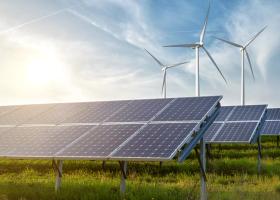
  5. Drastically decrease greenhouse gas emissions. Generating electricity from low-carbon energy sources like wind and solar decreases harmful air pollutants such as nitrogen oxides, sulfur dioxide, and carbon dioxide that lead to more heart attacks and stroke as well as obesity, diabetes, and premature deaths.
And it’s not just world events like the coronavirus we will witness, but also extreme weather cases.

"Weather events that are occurring as a result of climate change are displacing countless individuals - sometimes permanently. I have family members in some of these areas that are most vulnerable to these weather events...and if we don't take action, whole ecosystems and populations will be irrevocably damaged." - Susanna Wetherington

Third, we take action in the form of building solutions in the form of solution-focused efforts like Capsule Hack

“The best time to solve the climate crisis was centuries ago, but the second best time is today. If we want to be ready by the 2030 deadline then we need rapid development like never before, which is why I feel so passionately about Capsule Hack.” - Eva Lynch

Capsule Hack, a 2-day virtual conference and hackathon addressing the global climate crisis through inspiration and action. Over the two days, attendees will virtually attend a unique mix of keynote speakers, interactive panel discussions, and problem solving breakouts, which offers attendees the flexibility to explore and create.

  • Networking. We have countless virtual outlets for networking during this event from our Dashboard and Slack channels, to Google Hangouts for each Team. We have staff dedicated to mentor matching, resource sharing, and facilitating 1-on-1 discussions. Given we’re a global event, we can introduce like-minded, passionate, talented individuals from around the world to each other.

  • Climate Careers. Stepping into a new climate career or supporting sustainability efforts at your organization require both technical knowledge and expertise. To gain expertise, attending climate-focused, environmental hackathons increases your value and thought leadership.

  • New product, service, business, governance concepts and ideas. Intense problem-solving environments like hackathons facilitate the creation of brand new ideas and concepts. Working with a diverse set of team members and participants allows you to receive feedback instantly and from more varied resources than normal user research surveys and questionnaires. You can design your product or service with your user right next to you.

The work doesn’t just stop at our hackathon event, we have built a 12-month runway to ensure we build a space to support projects after the event. We know from experience that nothing is built overnight or in a weekend and the most important aspect is to have support mechanisms for projects to continue to grow from such incubators, accelerators, and other programs.

Register to participate in our conference & hackathon at capsulehack.io. Project submissions are due on June 15, 2020 and our event is held on June 20 & June 21. Follow @CapsuleHack, #CapsuleHack


By SDSN Secretariat 03 Aug, 2021
This month, SDSN celebrated its growing network, talked about the incredible amount of media coverage on the 2021 SDR, and reflected on this year's High Level Political Forum
By Fiona Laird 02 Aug, 2021
World Resources Institute recently released Unlocking a Renewable Energy Future: How Government Action Can Drive Private Investment, a report outlining key challenges to increasing clean energy investment and deployment. This report digs into the financial and regulatory mechanisms available to support policy frameworks like that outlined in SDSN USA’s Zero Carbon Action Plan (ZCAP), released in October 2020.
By Sam Van Hoof 30 Jul, 2021
The ‘Fit for 55' package includes a ban on combustion engines from 2035, a Carbon Border Adjustment Mechanism, and a Social Climate Fund among other provisions.
By Giovanni Bruna 29 Jul, 2021

SDSN Canada reconvened the network membership on June 16th, 2021 for the annual Members Meeting.

This year's meeting featured conversations on the current state of the SDGs in Canada, emerging opportunities for post-secondary institutions, networking breakout sessions, and a featured joint presentation by the Brookings Institution and Rockefeller Foundation on mobilizing campuses and communities for the SDGs using the 17 Rooms initiative. A lightning round of member initiatives was also included to highlight a portion of the SDG work happening across the network.

Recap the discussion by reading the meeting notes   or listening to the audio recordings for each session.

Meeting Highlights:

  • The SDSN Global annual Sustainable Development Report 2021  was released June 2021, tracking progress on the SDGs by country (Canada ranked 21st in the world). The report outlines the short-term impacts of COVID-19 on the SDGs and describes how the SDGs can frame the recovery.
  • The Government of Canada has released Canada’s National Strategy for the SDGs, Moving Forward Together. The strategy outlines a set of 30 actions towards the SDGs, including localizing the SDGs, supporting partnerships with Indigenous initiatives, and advancing research into the gaps in Canada's efforts to achieve the 2030 Agenda.
  • The 17 Rooms initiative  is a tool for advancing SDG collaboration, community-centric conversations, and bottom-up action. There are three key principles of consideration:
    • Every SDG gets a seat at the table (a dedicated room).
    • Identify what the next step is, and not the perfect step. What are things you can do together over the next 12 to 18 months that you can implement action on the SDGs?
    • It is about conversations, not presentations. The goal is to learn from each other and create a community of practice.
    • Join the 17 Rooms-X Community of Practice to access the beta toolkit.
  • A ‘lightning round’ of presentations by members spotlighting SDG work from Colleges and Institutes Canada, the Interdisciplinary Research Center in the Operationalization of Sustainable Development (CIRODD), Vancouver Island University, the University of Saskatchewan, and the University of Waterloo.

The meeting was also a chance to invite the membership into initiatives designed to be more intentional about the network’s collective presence and impact. In this vein, the network thinks that the 17 Rooms process can be a critical resource for campus conversations on the SDGs. It also relaunched the Member Challenge , is starting the ‘SDG Teaching Community’ for faculty across the network, and is convening a small working group of interested members to talk about an enhanced governance structure for the network.

By Lauren Barredo 29 Jul, 2021
We encourage stakeholders to provide meaningful input to aid the development of a better and more complete report. We invite feedback from individuals and organizations, from all sectors.
By FABLE 28 Jul, 2021
The FABLE Consortium is releasing two policy briefs over the coming months intended to advise national governments on sustainable land-use and diets. The first brief, entitled “Environmental and agricultural impacts of dietary shifts at global and national scales'' is now available.
By SDG Index 23 Jul, 2021
The Sustainable Development Report 2021 has been covered by the BBC, the Guardian, Washington Post, and more than 100 other media outlets.
By Isabella Massa 21 Jul, 2021
SDSN together with the United Nations Resident Coordinators in SIDS and the Permanent Mission of Antigua and Barbuda hosted on 12 July 2021 a High-Level Political Forum (HLPF) side event to discuss the issue of measuring multidimensional vulnerability, and its relevance for international financing mechanisms.
By SDGs Today 20 Jul, 2021
SDGs Today recently launched their My School Today! call to action, meant to support students and local communities to geo-reference their schools and education facilities as part of an effort to promote timely information on school locations in Africa
By SDSN Secretariat 20 Jul, 2021
SDSN and our networks are hosting a number of events alongside the UN's High-Level Political Forum on Sustainable Development (HLPF). We are thrilled to invite you to join us at the following events, which SDSN is hosting or are organized by our partners.
Show More
Share by: